braveminds
Brave
This is some text inside of a div block.
Every part of BraveMinds from self-discovery exercises to the Courage Lab is built on decades of research in developmental psychology, student development, and leadership science.
Leadership programs are now common across K–12 and higher education, but most don't lead to lasting change. Each common model carries limitations that BraveMinds was built to address.
One-time events facilitated by staff, often with recycled content. 25–100 students present for content, then no space to reflect or apply what they’ve learned.
Little follow-up or deepening once students are labeled ‘leaders.’ No formal development opportunities as leadership identity expands and changes over time.
Grounded in theory but doesn’t account for the longer learning curve. Meets fewer students and is often grounded in a limited range of perspectives.
Staff with little industry experience; content unchanged for 20+ years. Programs consistently attract the same 10% of students with a very similar profile — leaving many students behind.
BraveMinds draws on the work of contemporary researchers and thought leaders whose insights directly inform how we design, deliver, and evolve the program.
Growth occurs when the challenge presented to a learner is balanced by adequate support. Too much challenge creates anxiety; too little creates stagnation. BraveMinds calibrates each day’s arc to this balance.
Students thrive when they feel they matter — that they are noticed, cared about, and needed. BraveMinds makes mattering a structural feature through intentional belonging rituals and shared language.
Learning is most durable when students cycle through concrete experience, reflective observation, abstract conceptualization, and active experimentation. BraveMinds is entirely lecture-free and experiential by design.
The growth mindset framework shapes how BraveMinds frames failure and learning — as feedback, not identity. Students practice naming fixed-mindset moments and reframing them in real time.
The developmental journey from relying on external formulas to trusting one’s internal voice. BraveMinds’ ‘You at the Center’ pillar scaffolds this transition through the Human Core Assessment.
The Seven Vectors describe how students develop competence, manage emotions, move through autonomy toward interdependence, and establish identity. BraveMinds addresses all seven across four days.
Leadership as a values-based, collaborative process aimed at positive social change. The model’s individual–group–community framework mirrors BraveMinds’ three pillars precisely.
Understanding the innate moral intuitions that shape how young people navigate fairness, care, loyalty, and authority. BraveMinds helps students identify their own moral landscape and lead from it with integrity.
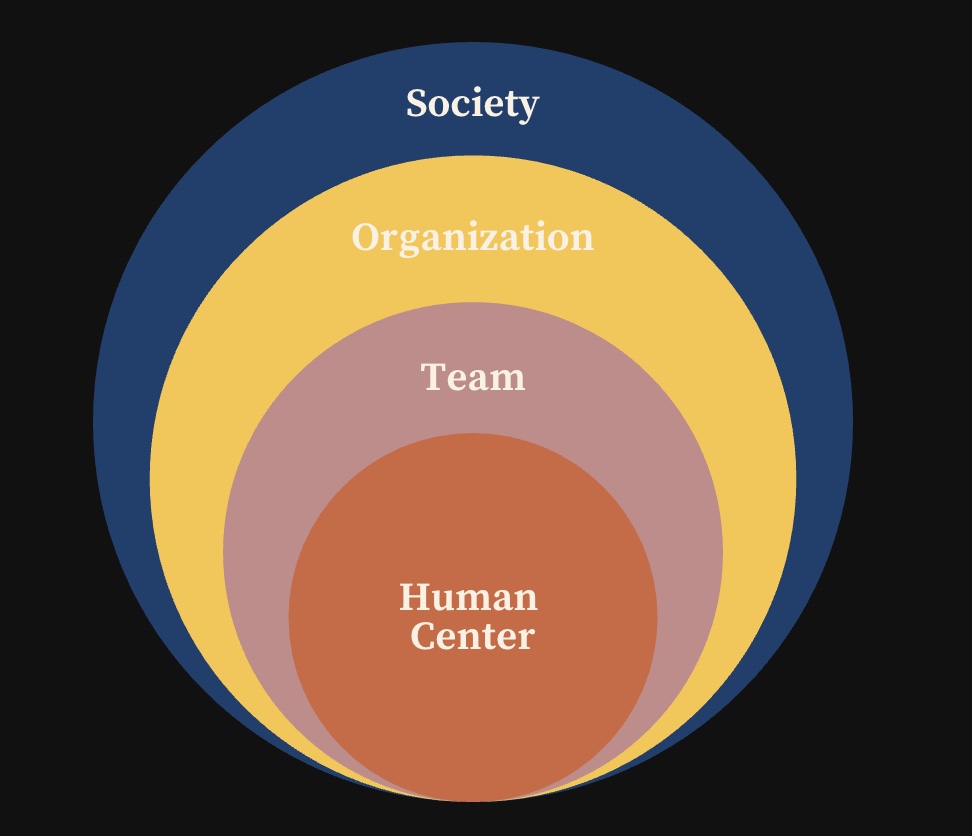
idealis. teaches leadership as a set of rings that grow outward from the individual. For middle schoolers, BraveMinds starts at the center. The stronger a student is at their core, the further their impact reaches. And when things get hard at school, at home, or inside their own head, they can handle it with more clarity and confidence.